Confusion About Fusion and Infusion

This article, published on March 9, 2011 has been provided for Olive This! by our distributor. It will shed some light on the two different processes used to flavor extra virgin olive oils:

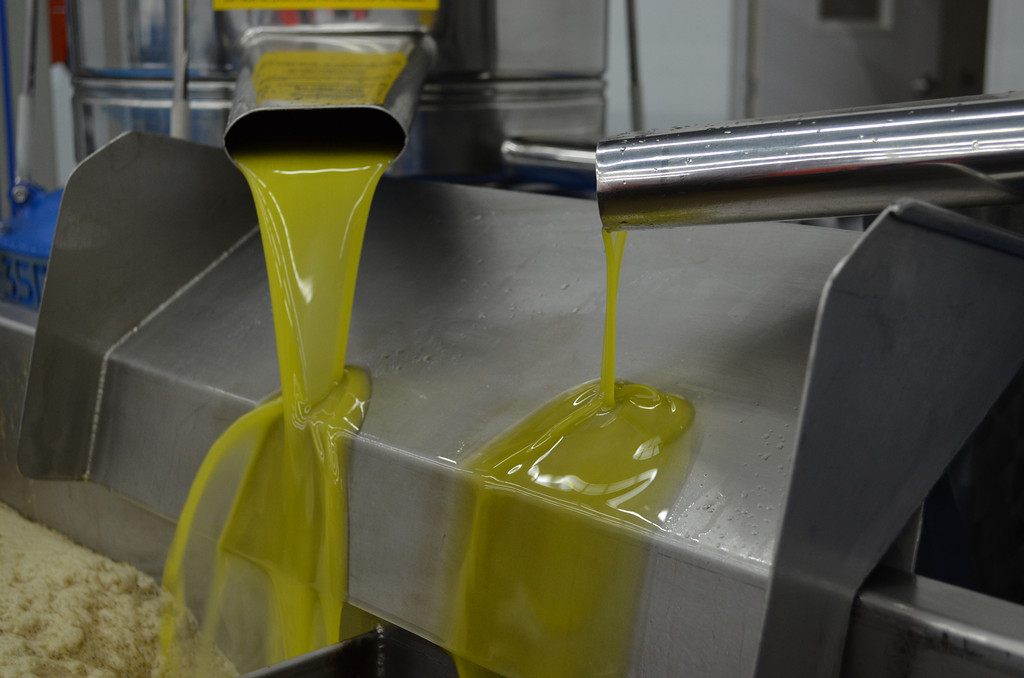
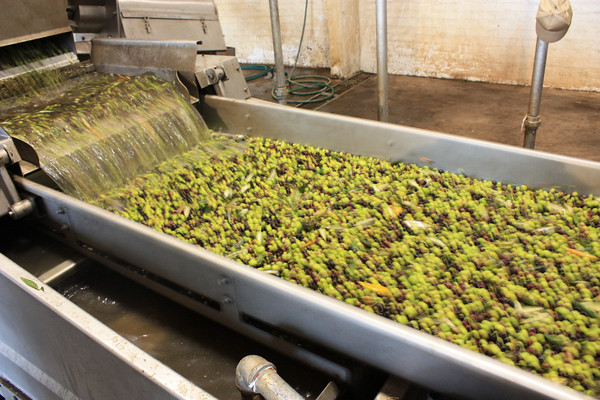
First off, lets talk about “fused” olive oil or what is also referred to as “agrumato” in Italy. Agrumato olive oil is made by crushing ripe, sound olives with whole, fresh fruits, herbs or vegetables at the time of crush. In the winter, at our mill in Tunisia, citrus fruit is picked at the peak of ripeness, split in half and then thrown in with the olives. The olives and fruit are then crushed simultaneously. This process allows for the essential oils from the citrus peel to mingle with the oil from the olives. By the way, ripe olives contain up to 20% oil but the majority of an olive is comprised of water. The waste water from the citrus and olives is centrifuged away and the result is a bright, fresh, fused citrus olive oil.

More than 90% of the world’s fused or agrumato olive oil is made in the Northern Hemisphere. Because agrumato is typically made from ripe olives at the end of the season, the window for crushing in the Northern Hemisphere is in the winter, usually between mid December and late January. With few exceptions, many fresh fruits, vegetables and herbs are unavailable during these cold winter months. More often than not, when one sees a product claiming that it is an agrumato chili oil or agrumato basil oil, the mill is either adding frozen or freeze dried product to the olives at the time of crush, or simply lying about the process and actually infusing olive oil after the fact.

Infusing is the process of adding flavor to olive oil after it has been made. For some, infusing olive oil is nothing more than attempt to cover up poor quality, defective, old oil. The problem with this strategy is that regardless of what flavoring is added to poor quality olive oil to mask it, the rancidity, fustiness and other negative attributes will still be evident underneath. Furthermore, synthetic chemicals and flavors are often implemented as flavoring agents because they are more cost effective than, say, essential oils, concentrates or extracts. This “garbage in, garbage out” mentality is rampant in the industry where aesthetics and health take a backseat to the bottom line.

In the test kitchen, when formulating our infused extra virgin olive oils, I have a simple mandate to adhere to. The infused extra virgin olive oils that we make will use the freshest extra virgin olive oils available in our collection that are most aesthetically compatible with the natural products we use to flavor them with. This simple mandate requires that the chemistry, freshness and quality of our infused olive oil are second to none. We are not in the business of flavoring a single oil from a single hemisphere. We painstakingly move our infused collection to coincide with the fresh crush. It is a labor of love that we hope you find evident in the flavor, freshness and quality of our products.

Olive Oil: A Natural Painkiller?

This Huffington Post Article by Leo Gelland, M.D. Nicely Sums it Up

– WEDNESDAY, APRIL 27, 2011

Could a traditional food have pain- and inflammation-reducing effects similar to over the counter pain medicine like ibuprofen?
Scientists from Italy, Spain, the U.S. and Australia have discovered that extra virgin olive oil can provide significant health benefits,  including the ability to help reduce pain and inflammation. This robust, flavorful oil is an example of the food as medicine concept, that foods can have a powerful impact on health.
A Mythical, Sacred Oil
From ancient Greece to the Holy Land, olive oil has been treasured.   Celebrated as sacred in Greek mythology, the olive branch symbolized  peace in Hellenic culture.  Evidence of this ancient oil was discovered  in 1901 at the “Room of the Olive Press” at Knossos on the island of  Crete in the Eastern Mediterranean Sea.  From there olives were pressed  into oil over 4,500 years ago and the olive oil was exported to North  Africa and mainland Greece. Cultivation of olive trees spread around the Mediterranean where  olive oil flourished along with many early civilizations. The bible  speaks of olive oil, and it has been used by Christianity and Judaism as  a holy anointing oil.  Today, the major producers of olive oil are Spain, Italy, Greece, Tunisia, Turkey, Morocco and Syria.  But the growing popularity of olive oil can be seen in the spread of  cultivation around the world to countries such as the U.S., Chile, and  South Africa. Australia has become an energetic olive oil producer and  exporter, and has just announced a record crop. During travels with my family from the south of France to Tuscany  to  Greece I have witnessed the special beauty of the olive tree and tasted  its fruit. Able to withstand heat, sun and survive on only a little  moisture, the hardy olive tree became an icon of the Mediterranean  region.  Freezing temperatures, however, can harm the trees and the  crop.
Eating Healthy With Olive Oil
Extra virgin olive oil can contribute nutritional support in the fight against such health problems as arthritis, cardiovascular disease, high cholesterol, and in pain management. A research study from Spain has shown that higher olive oil  consumption is associated with leaner body weight, an important factor  in prevention of chronic conditions. Another study from the universities of Navarra and Las Palmas de Gran  Canaria in Spain looked at how diets including olive oil might offer  protection against  depression: Bad Fats Linked to Depression
Natural Painkiller Discovered in Olive Oil
Recent research has identified the antioxidant called oleocanthal,  which is only found in extra-virgin olive oil. Scientists at the Monell  Chemical Senses Center, in Philadelphia, found that oleocanthal in olive  oil has a potency strikingly similar to that of the drug ibuprofen  in inhibiting the cyclooxygenase (Cox) enzyme that causes pain and  inflammation. Their findings were published in the science magazine Nature. Given the side effects of common pain relieving drugs, finding a  nutritional way to reduce pain and inflammation could be a solution for  people suffering from pain. In another study Italian researchers explain that the characteristic  pungent and bitter taste of virgin olive oil have been attributed to  phenols in the oil that have potential antioxidant, anti-inflammatory,  chemopreventive and anti-cancer benefits.
Research on Health Benefits of Olive Oil
At the meeting of the “International conference on the healthy effect  of virgin olive oil” that took place in Spain in 2005, numerous  benefits of virgin olive oil from the research were outlined.  They  looked at the consumption of olive oil from the perspective of issues  such as cardiovascular health, cancer and longevity.   With respect to  anti-aging they noted: “The more recent studies consistently support  that the Mediterranean diet, based in virgin olive oil, is compatible  with a healthier ageing and increased longevity.”
Consumption of olive oil has been associated with:
  • Reduction of total cholesterol and an increase in  the high-density cholesterol (HDL-C), which has a protective effect on  blood vessels.
  • Improved sensitivity of cells to insulin, which helps to prevent the Metabolic Syndrome.  Preventing Metabolic Syndrome is important, because the syndrome  increases the risk of cardiovascular disease, diabetes, high blood  pressure and obesity.
  • Decreased risk of cardiovascular disease, high blood pressure and Alzheimer’s disease.
Potent Antioxidant Power of Olive Oil
Phenolic compounds are potent antioxidants found in virgin and  extra-virgin olive oil. These compounds give unrefined olive oils their  distinctive flavors and high degree of stability.
Studies indicate these compounds may be able to:
  • Turn off the activity of genes that produce the kind of inflammation that causes coronary heart disease.
  • Decrease production of inflammatory chemicals called thromboxanes and leukotrienes.
  • Decrease the production of the most damaging form of cholesterol, oxidized LDL cholesterol.
  • University of South Australia researchers note that  compounds from the olive were found to be antimicrobial against various  bacteria.
And olive oil is just the beginning of anti-inflammatory foods. Learn more about fighting pain and inflammation in my article: Natural Anti- Inflammatory Foods and Supplements That Help Arthritis
Enjoying Olive Oil
The research studies focus on the benefits of extra-virgin olive oil,  so this is what I always buy.  I look for organic oil that has been  grown without pesticides.  Freshness counts, so I like shop where they  sell a lot of oil, such as a big health food store.  Store it in a cool  place. The amount of olive oil associated with protection against  inflammation is only two teaspoons a day, which is easy to achieve.  A  sprinkle of olive oil makes a simple salad dressing, and a little oil  can be used for dipping bread, instead of butter.  Olive oil can also be  used in baking. Here is a popular tangy and sweet recipe from my book The Fat Resistance Diet, an anti-inflammatory dietary program.

How To Taste Extra Virgin Olive Oil

Just as different types of grapes make different wines, different types of olives make distinct types of olive oil. The olives are also impacted by varietal of grapes, weather, soil conditions, and how handled and harvested. Just like wine, no two olive oils are created equal. Tasting olive oils allows you to discover which oils you like best, and which ones you prefer in your favorite recipes, or with your favorite bread or vegetables.

  • Start with the mildest oil.
  • Pour a little olive oil (approximately 1 teaspoon) into a tasting cup. Cover the cup with one hand. Warm oil with your hands until it is close to body temperature by swirling it gently in the cup.
  • Lift the cup to just under your nose and sniff rapidly and deeply three (3) times, raising your nose up and away from the oil between each sniff. Suck air through the oil to coax more aromas out of it, and then close your mouth and breathe out through your nose. Olive oils have aromas just like wine. We then tried to analyze the aroma. There really is a difference in aromas!
  • Take a sip or slurp (approximately 10 drops into mouth). DON’T SWALLOW! Roll the olive oil around in your mouth for approximately 6 seconds and then swallow. The oil should touch all areas of the mouth so that the various tastes and sensations can be noted.
  • Between tasting each kind of olive oil, drink water or eat a small piece of bread to cleanse your palate.

Health Facts

Extra virgin olive oil decreases in flavor and health benefits over time. Freshly-crushed olive oil is like freshly-squeezed fruit juice in that it contains the most flavor and nutrients. Old, poorly-made and improperly stored extra virgin olive oil yields fewer, if any, health benefits and undesirable flavor.

Becoming familiar with a particular extra virgin olive oil’s flavor characteristics and chemistry (i.e. antioxidant content, oleic acid, FFA, and crush date) will help you make an educated decision about which olive oil to use.

Crucial Olive Oil Chemistry Definition Key

Oleic Acid is a monounsaturated omega-9 fatty acid found in olive oil. Olive oil is generally higher in oleic acid than other vegetable fats. The range found in extra virgin olive oil is between 55-85%. Extra virgin olive oil that is high in oleic acid has greater resistance to oxidation.

FFA: Based on IOOC standards, the maximum limit for free fatty acid in extra virgin olive oil is 0.8g per 100g (often noted as .8%). A low FFA is desirable. Free fatty acid speaks to the condition of the fruit at the time of crush. The higher the FFA, the greater the indication that poor quality fruit was used, including damaged, overripe or insect-infected; the oil was overheated during production; or there was  too much of a delay between harvest and crush.

Peroxide Value: Based on IOOC Standards, the maximum peroxide value for extra virgin olive oil is 20. A very low peroxide value is desirable. Unsaturated free fatty acids react with oxygen and form peroxides, which create a series of chain reactions that generate volatile substances responsible for a musty/rancid oil smell. These reactions are accelerated by high temperature, light and oxygen exposure.

Polyphenol Count: Polyphenols are a class of antioxidants found in a variety of foods. Polyphenols such as oleuropein, oleocanthal, and hydroxytyrosol impart intensity connected with pepper, bitterness and other desirable flavor characteristics. Recent studies indicate that these potent phenols are responsible for many of the health benefits associated with consuming fresh, high quality extra virgin olive oil. Phenols in olive oil decrease over time or when exposed to heat, oxygen and light. Consuming fresh, well-made olive oil with high polyphenol content is crucial when trying to obtain the maximum health benefit.

For additional health benefits, check out this interesting article, Olive Oil: A Natural Pain Killer?

Another article worth a read is A Myriad of Health Benefits Associated with Consuming Extra Virgin Olive Oil.

Health Benefits of Balsamic Vinegar

Balsamic  vinegar health benefits comprise reduced risks of heart diseases, cancer  and other infectious diseases. Moreover, some studies have shown that balsamic vinegar helps prolong wellness, control diabetes, and assist in digestion, etc.

For more details see, Balsamic Vinegar Health Benefits


Stay updated with the latest news from Olive This! - Sign up for our newsletter here.

Copyright 2021 - Olive This! - All rights reserved. Privacy Policy.
Site by Horde Marketing, LLC